PROJECT TYPE

B2B Web Platform

SCOPE

End-to-End Experience
Content Architecture
CMS Design

ROLE

Product & Experience Designer

RESPONSIBILITIES

Experience Strategy
Information Architecture
CMS & Workflow Design
UI System

BACKGROUND

This redesign reframed Success Stories into a strategic B2B conversion asset, helping potential partners validate our expertise through real, verifiable results and accelerating their decision-making journey.

RESULT

Measured impact after launch

Same-quarter comparison:

Active engagement doubled within one quarter
Content consumption increased by over 140%

Page views
+140% growth
Active users
+100% growth

Challenge

Reframing the Business Challenge

User behavior analysis indicated that the Success Stories wasn’t functioning as a B2B conversion asset. Instead of guiding prospects along the intended evaluation path, the unclear structure led to low engagement and no meaningful next steps

[interface] image of software interface (for a edtech)

Discovery

Exposing Structural Barriers in the Journey

Dead-End Pages Interface Display

Dead-End Pages

Users lacked a clear journey, with no conversion or related recommendations

Low Engagement & Discoverability Interface Display

Low Engagement & Discoverability

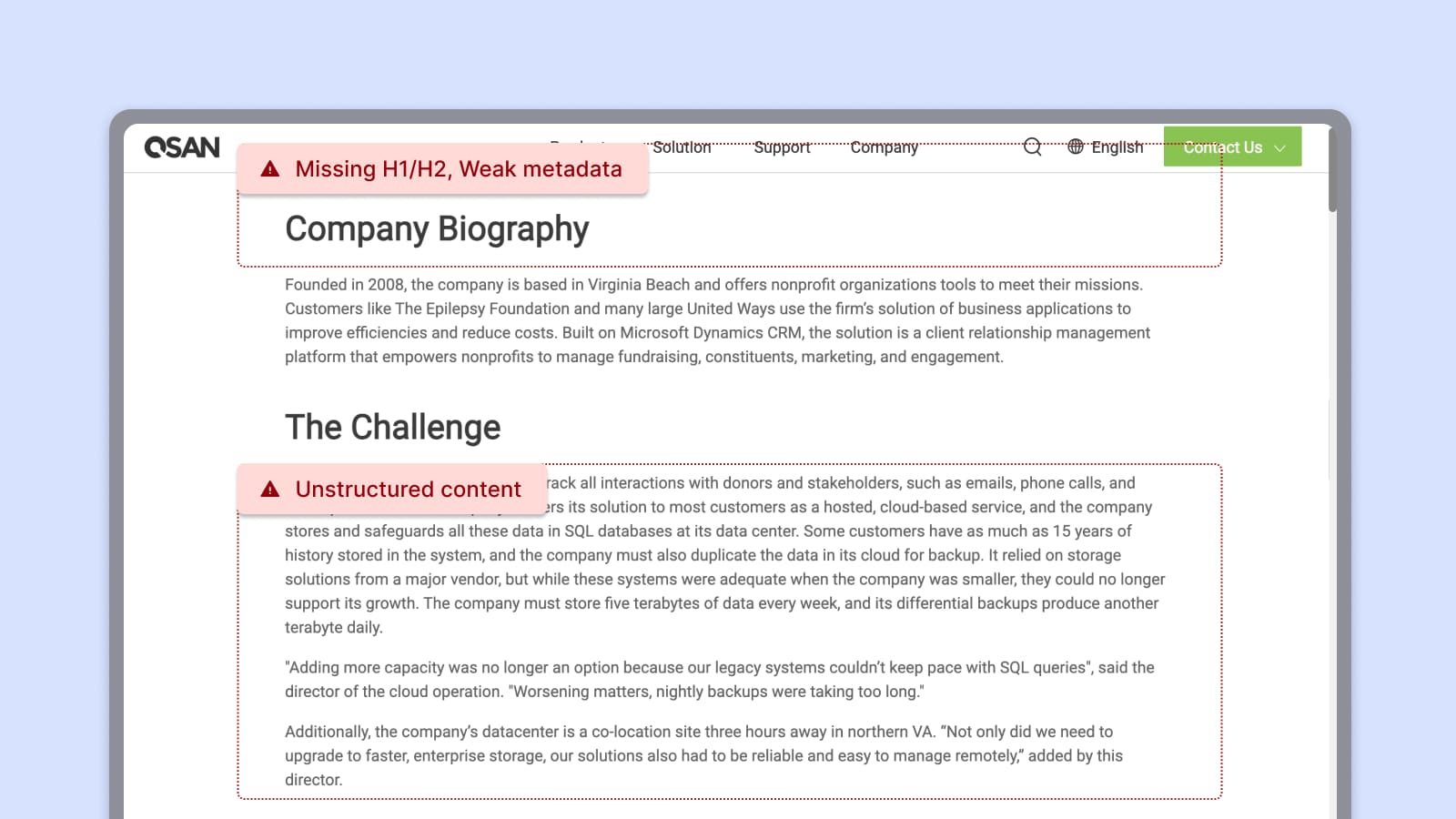
Nearly 70% of users dropped off early due to long, unstructured content and weak SEO.  (missing headings and metadata)

Reduced Credibility Signals Interface Display

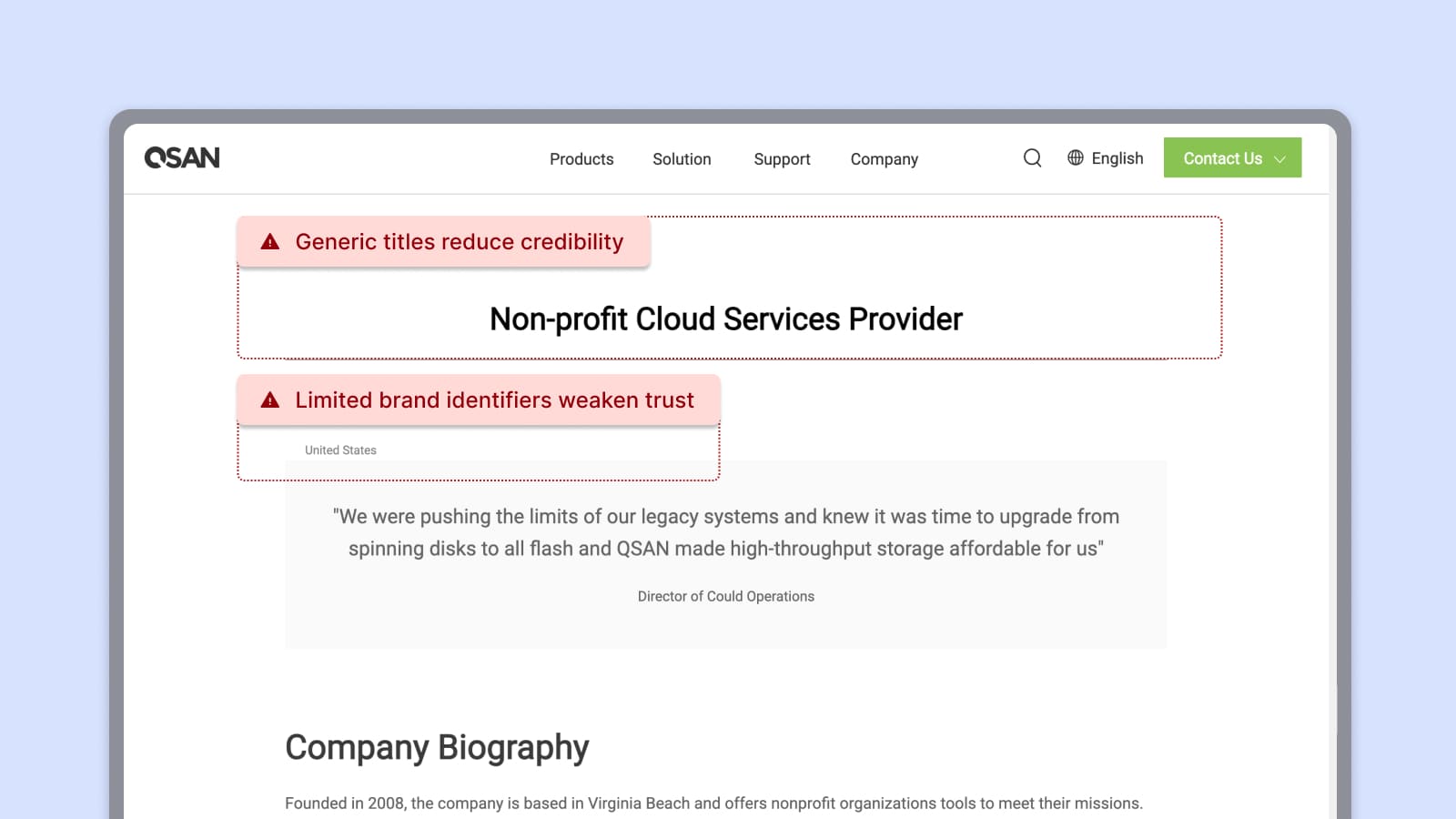
Reduced Credibility Signals

Many clients could not provide logo permissions, limiting the perceived authenticity and impact of case studies

Sales Inefficiency Interface Display

Sales Inefficiency

Teams needed structured ways to filter and present case studies

Content Strategy

Reframing the Narrative for Clarity and SEO

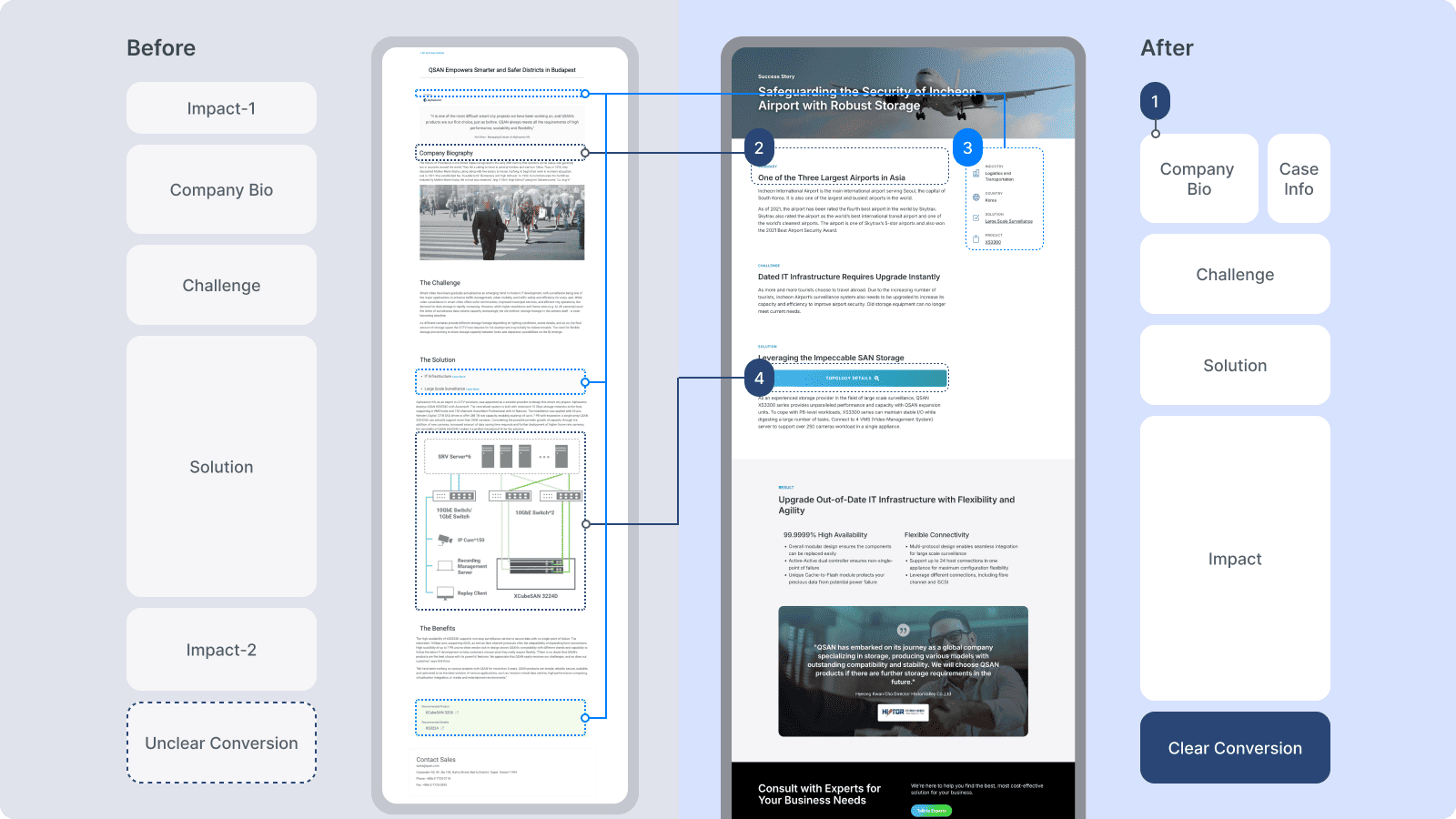
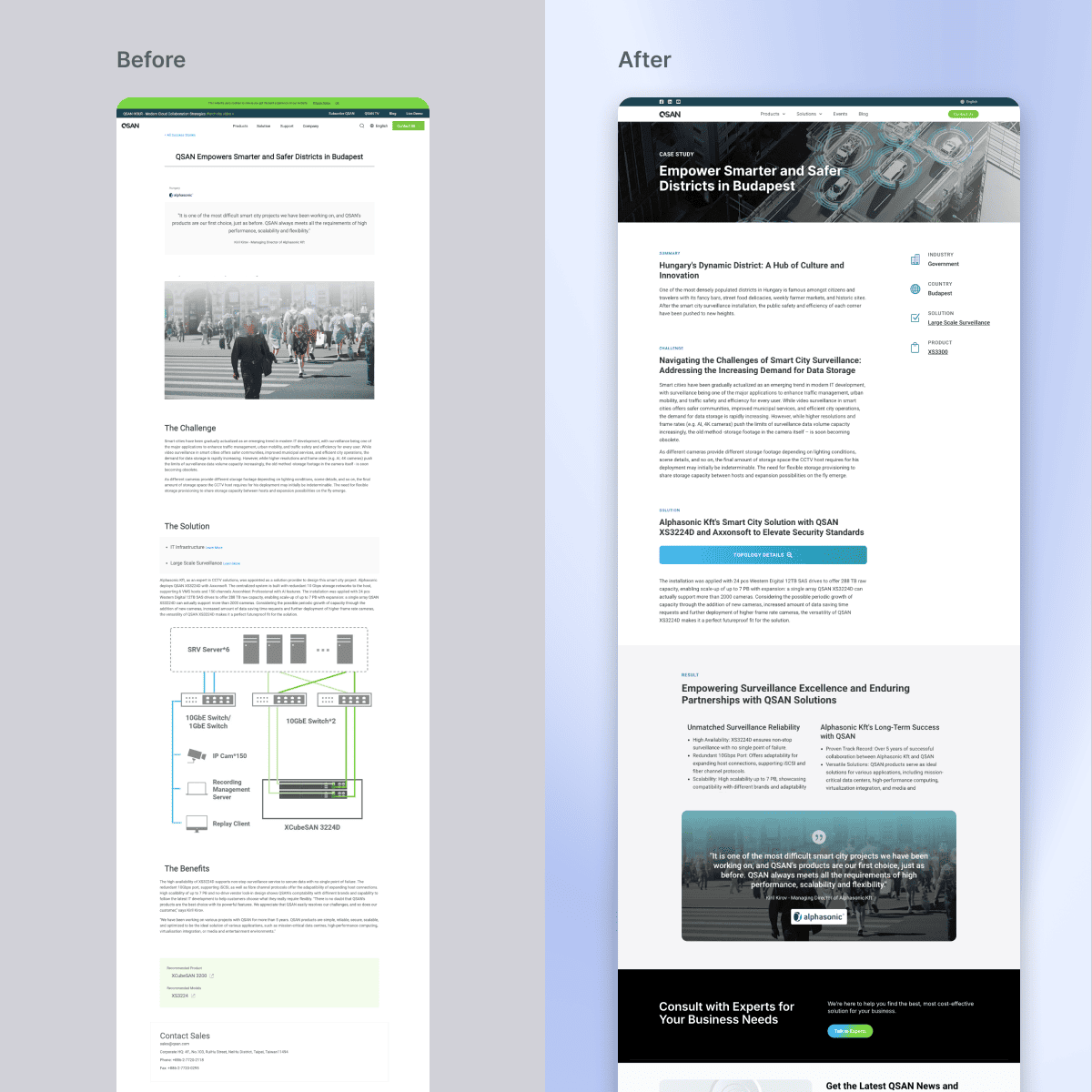
To fix fragmented storytelling, I redesigned the content strategy from the ground up:

  • Reframed articles into a coherent arc: Challenge → Solution → Impact
  • Converted vague titles into SEO-friendly sentences  and controlled article density for better readability
  • Consolidated scattered client details into a Info Board to compensate for missing names/logos and strengthen credibility.
  • Redesigned the topology into a low-friction layout, minimizing visual noise.

Content Strategy Before vs After

Information Architecture

Turning Site into a Structured Content Database

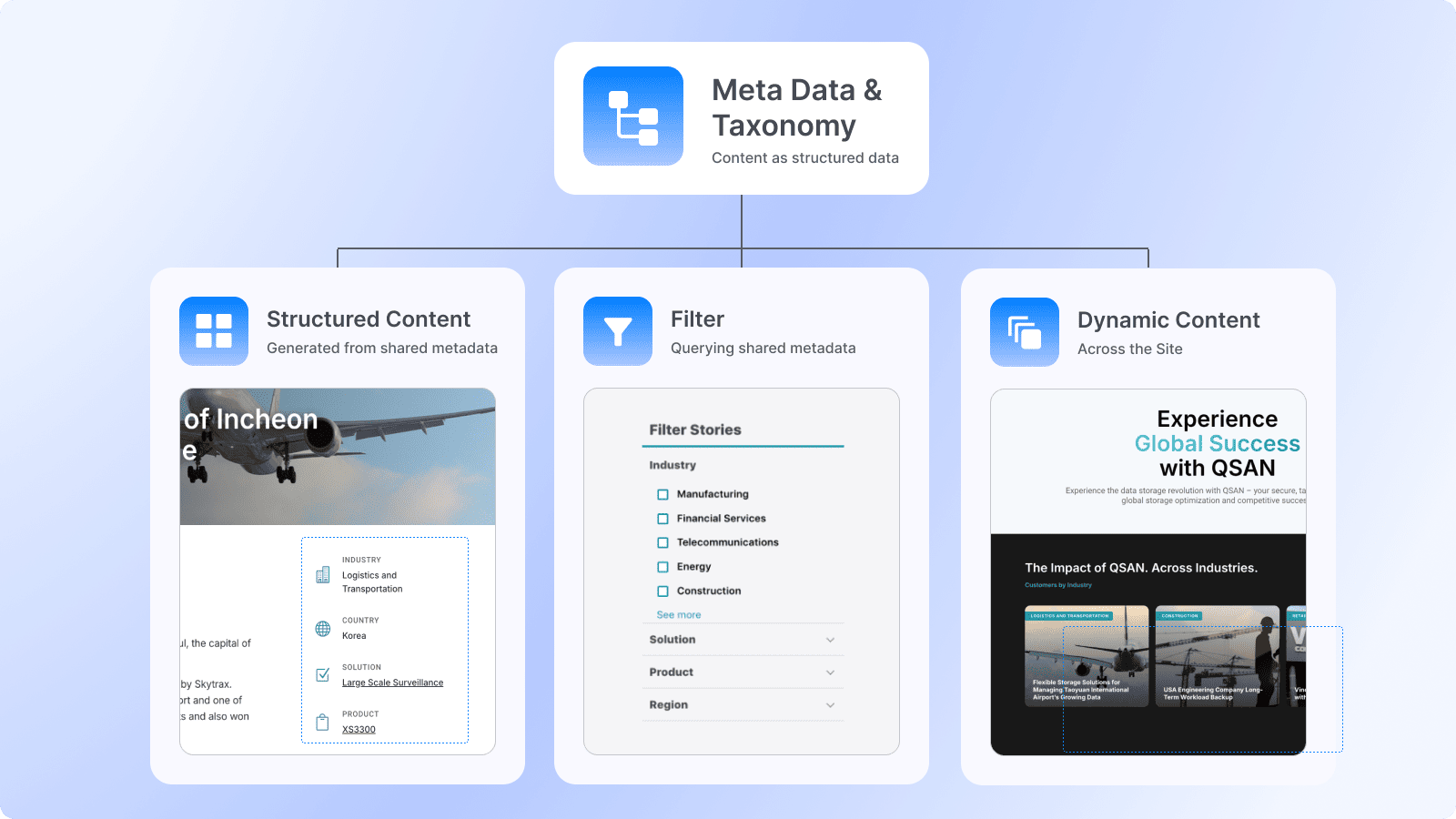
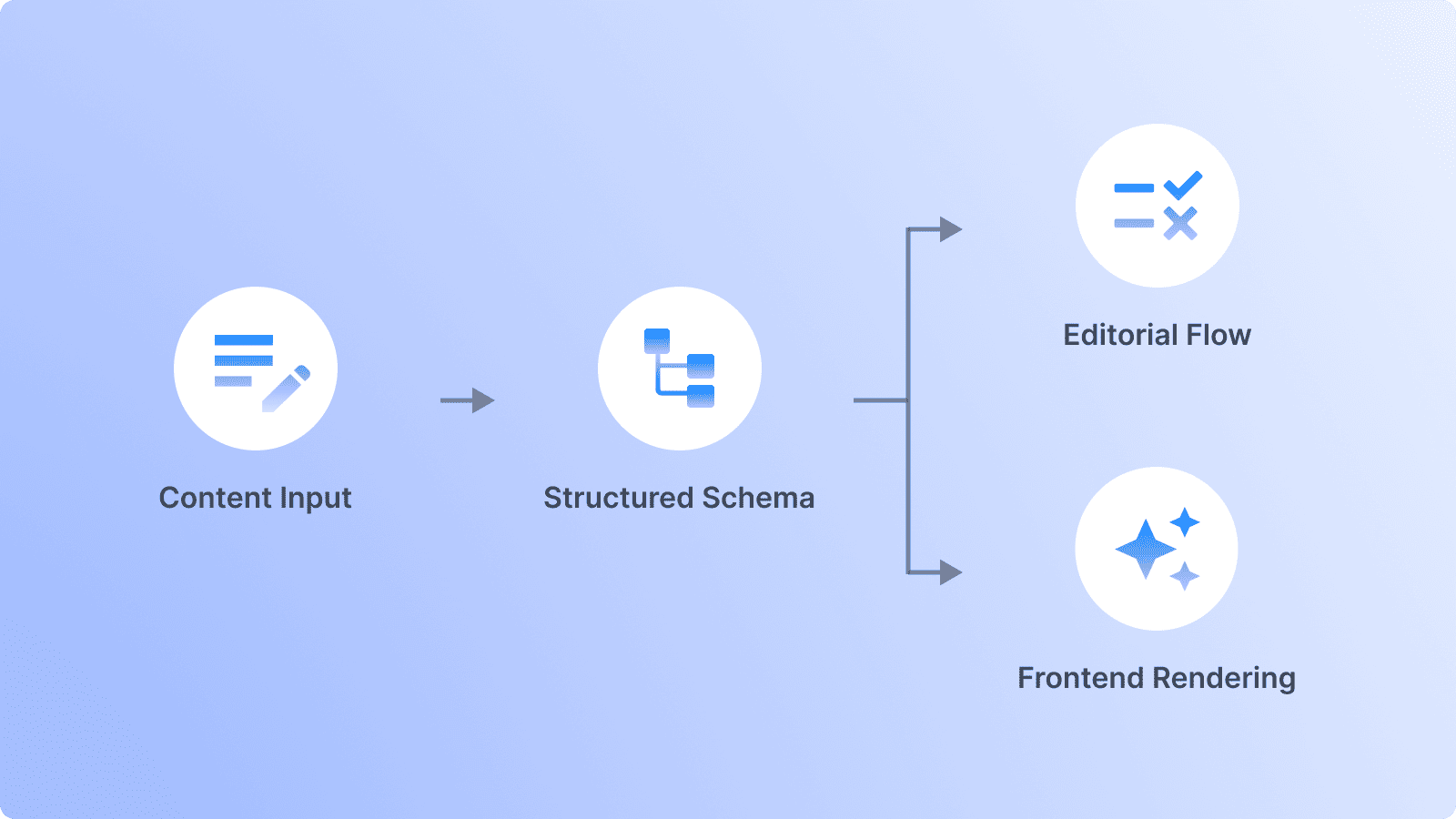
I treated each case as a data object that feeds into filtering, recommendation, and cross-site placement.

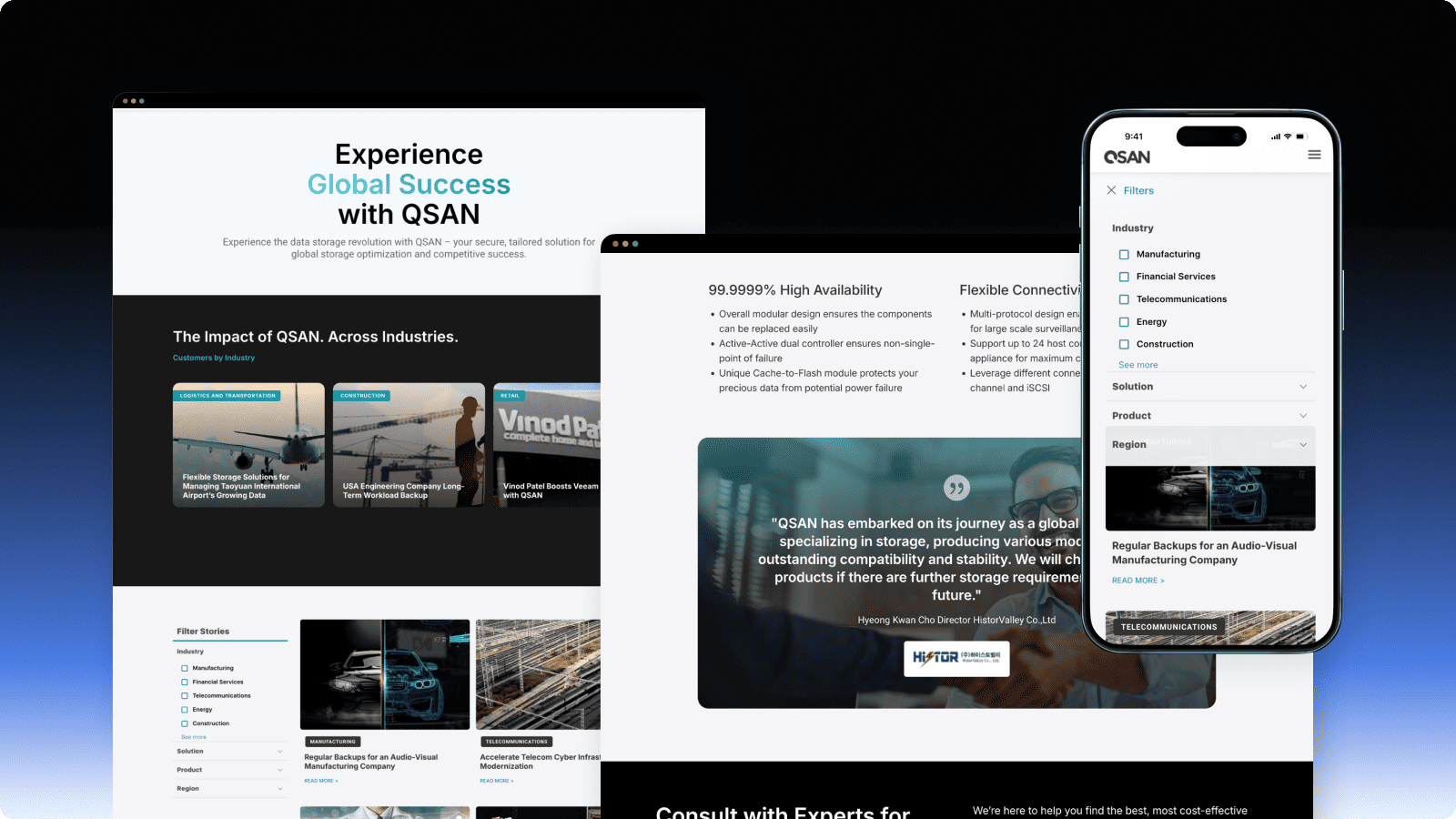
I defined a metadata and taxonomy system (country, industry, product line, solution category) that:

  • Enables multi-dimensional filtering
  • Improves internal discoverability
  • Enhances content relationships
  • Ensures long-term scalability

Structured Content Database Display

System & CMS Architecture

Designing a CMS Workflow That Scales with the Team

I designed a CMS workflow grounded in real editorial and operational needs, ensuring content could be created and maintained efficiently.

  • Unified content fields, taxonomy, and rendering logic into a consistent system
  • Validated the flow through testing and iteration
  • Ensure the schema and frontend rendering worked seamlessly
CMS workflow Display

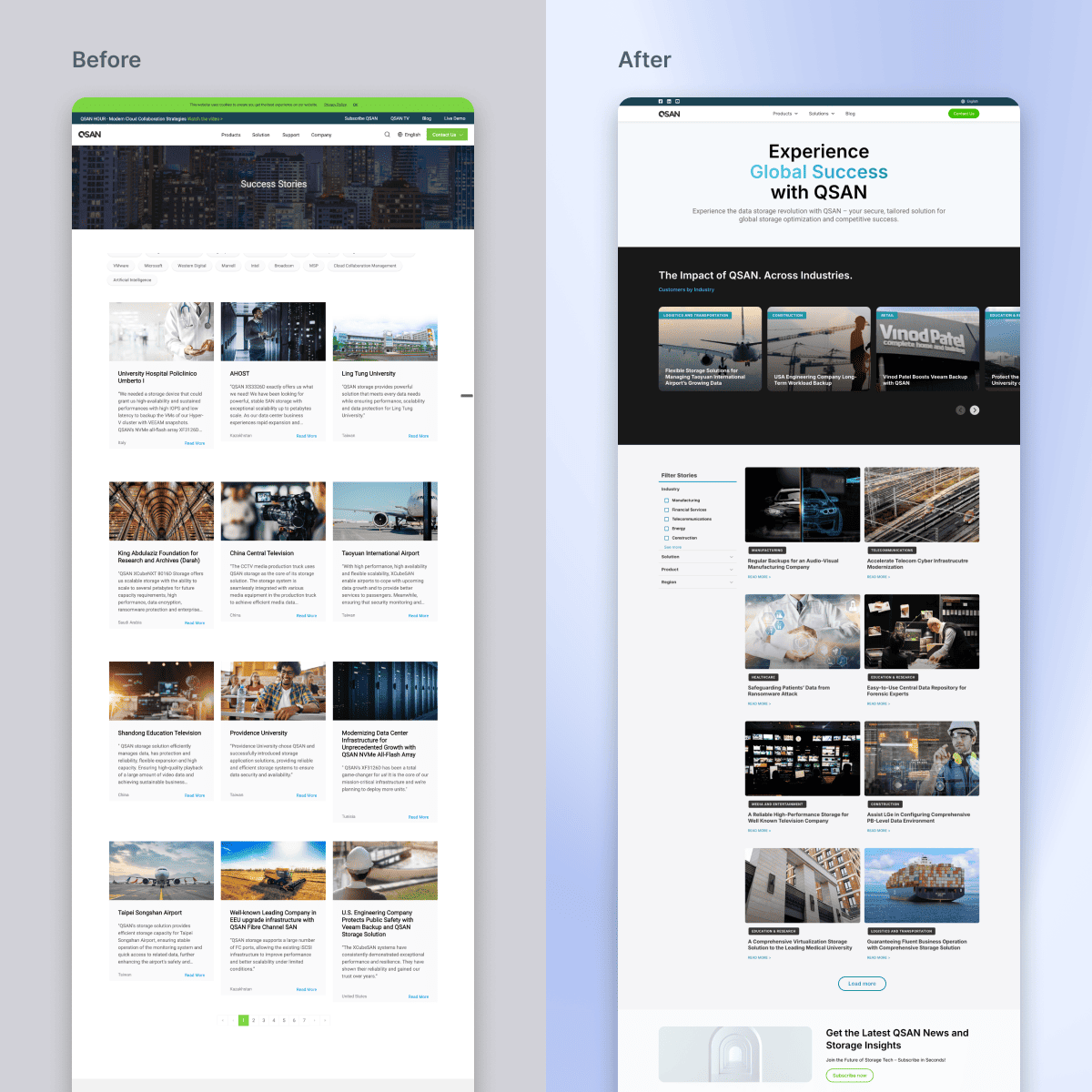
Interface Design

A Cleaner Reading Experience That Guides Action

  • Applied brand visual identity to build a clean, professional interface
  • Designed reusable UI components and layout patterns to ensure consistency across multiple pages.
  • Enhanced usability by minimizing cognitive load and emphasizing visual hierarchy.

| Archive Page

UI Design Result Before vs After-Archive Page

| Single Page

UI Design Result Before vs After-Single Page

Reflection

From Ambiguous Problems to Measurable Business Impact

This project pushed me to operate beyond UI, to architect systems, define workflows, and ensure every decision contributed to measurable business outcomes.

Working as a single designer, I learned to distill an ambiguous challenge into clear processes, stay aligned with shared goals, and navigate constraints through structured, iterative problem-solving.

Most importantly, it strengthened my ability to deliver design grounded in robust structure, predictable governance, and long-term maintainability. This is an end-to-end mindset that brings clarity, efficiency, and real business impact to any team.

View the Live Page
image of a computer showcasing educational software (for edtech)